The System of Record for AI-Native Development is Here
Merget v0 is live: a system of record for AI-native development, built to capture prompts, diffs, goals, context, spend, and team history across coding agents.
The System of Record for AI-Native Development is Here
Hello, world.
After six months of designing, engineering, and non-stop building, the Merget v0 is live.
If you've been building with AI, you're familiar with the friction. Claude Code doesn't know what Cursor did last week, and Codex doesn't know why the auth refactor happened. Across tools and teams, there's no persistent record of what your AI built, what it cost, or why.
Merget is the system of record for AI-native development: one layer that captures every prompt, every diff, and every goal across every tool and agent your team uses.
To get it into builders' hands fast, we're launching the Merget Hackathon, running through July 31.
Build a game, entirely through vibes. Share context between agents, code front-end in Codex and back-end in Claude, with a year of Claude Max on the line, and prizes that scale with the crowd.
How It Works
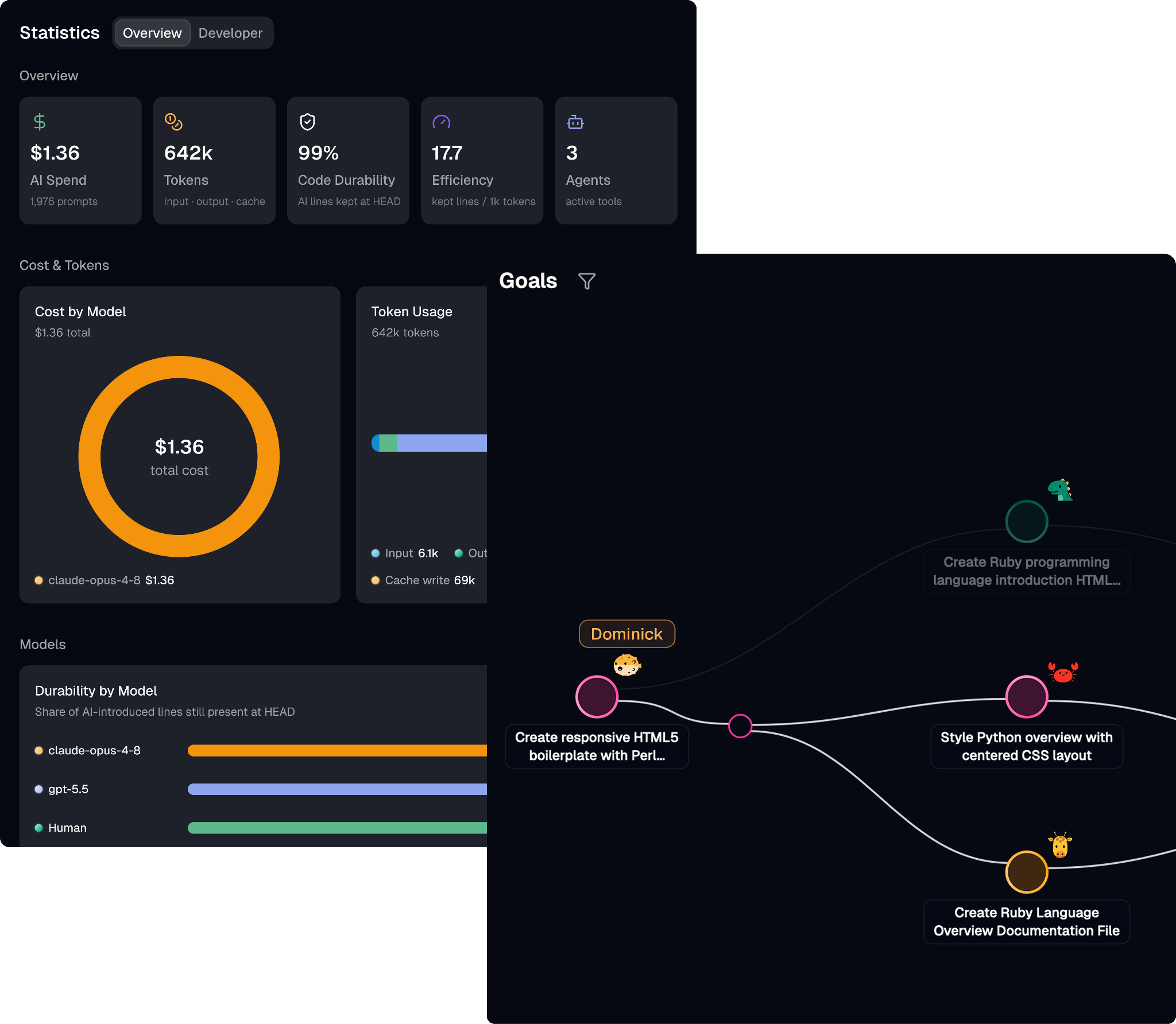
Merget brings vertical ingestion to your codebase. Every interaction with and from your AI agents, from a one-line integer fix to a full cloud migration, is automatically captured, categorized, and linked across agents, sessions, and team members.
Each prompt is read alongside the change it produced and filed into a clean hierarchy of goals, prompts, and steps: an audit trail that builds itself.
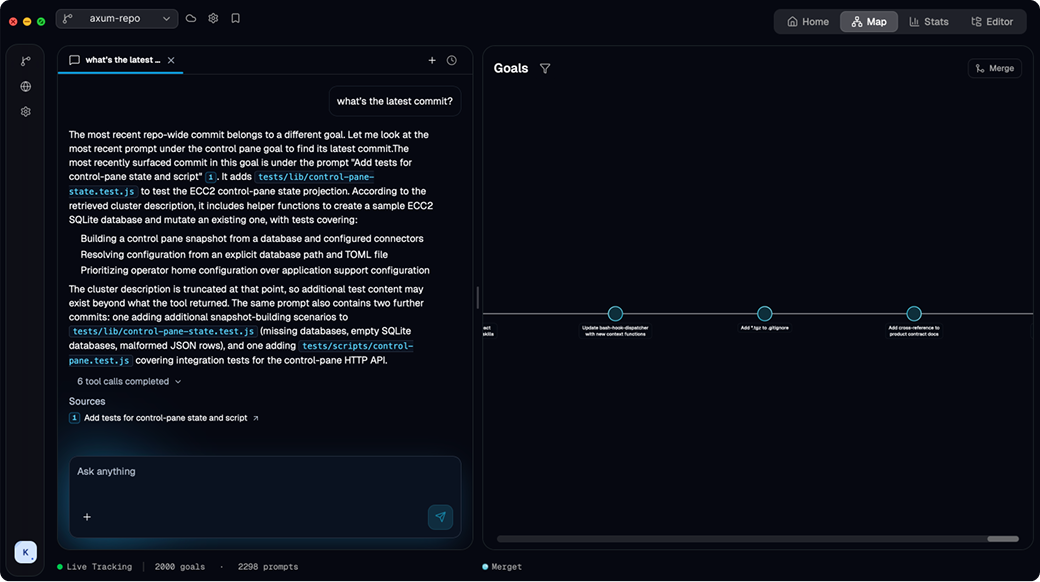
Connecting an existing GitHub repository takes just a few clicks. The moment it syncs, Merget maps the entire codebase and organizes each commit into structured goals, while leaving the repo otherwise identical.
Today, every AI tool builds its own context cage. Merget breaks it, so your codebase and build context never walks out the door. Your engineers keep coding in the tools they know, and entire teams operate from one visual source of truth.
The Home View and Organizational Memory
Merget's home view is a live window into everything happening in the codebase: what each contributor worked on most recently, what's in flight right now, and the prompts still landing as agents work. Anyone can see what anyone else is doing, in plain language, with no standup or debrief required.
For the harder questions, there's D.O.M: Deep Organizational Memory. Ask your codebase anything and get a plain-language answer drawn from your team's actual prompts, commits, and goals: why you switched to JWT, what changed in the auth refactor, which goal touched the payment code, who made the most recent commits to a given module, or what a contributor has been working on all week.
D.O.M draws on the repo's full development history and returns every answer with citations grounded in your actual record, so you know what's grounded and what's generated.
The Map and Stats
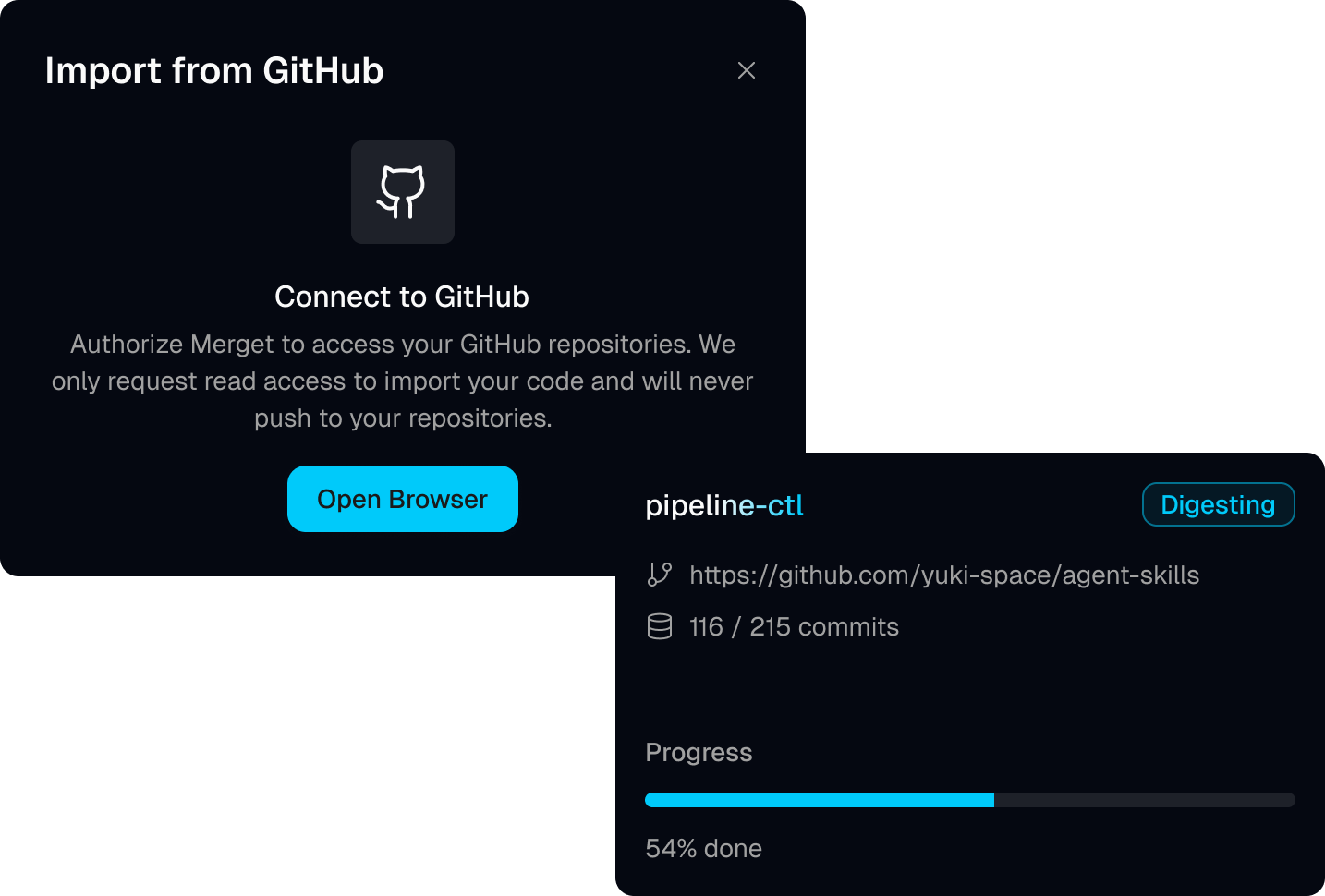
Each of those citations connects directly to the Merget Map: an interactive graph of your project's entire history. Where a commit log gives you a list of what changed, the Map gives you the shape of the work. Every goal, every contributor, and every place where separate threads of work branched and re-converged.
Click a citation in D.O.M and the Map pans straight to the goal behind it, with the exact prompt and step open in the detail panel. One map, across tools, teams, and time zones.
Merget Stats rounds out the governance layer. See AI spend by model, how much AI-written code actually survives in production, how efficiently tokens convert into durable code, and which tools perform best for your organization. Engineers, managers, and finance finally read from the same numbers, updated live as new work lands.
The OS For AI-Native Development
Vibe coding is powerful. But without visibility, it stays a solo sport. Merget is what makes it a team one: persistent context, shared history, and enough legibility that anyone can understand, contribute to, and build on what the AI has been doing. That's what democratizing vibe-coded software looks like at scale.
We know this problem because we lived it. Partway through the build, we started building Merget on Merget. The moment we did, our work accelerated. We could finally see our context, our spend, and our history the way our customers would, and the pain points we hit on our own platform became the features above.
The Hackathon is an extension of that idea. Build a game through July 31, entirely through vibes. Share context between agents, code front-end in Codex, and back-end in Claude.
One winner takes home a year of Claude Max. Hit 1000 signups and we're giving out three, so bring your friends, build something fun, and show us what collaborative vibe coding can do.
Download the beta, bring your repo, and build something great.